

Celebrating Culture and Diversity: Good Shepherd Montessori International School's Tanabata celebration with Arts and Crafts
At our Montessori school, we believe that learning about different cultures enriches children's understanding of the world and nurtures respect for diversity. Each year in July, we celebrate Tanabata, a traditional Japanese festival, through engaging arts and crafts activities. This celebration offers a wonderful opportunity for children to explore cultural traditions, practice new vocabulary, and express creativity in a meaningful way.
What is Tanabata and Why We Celebrate It
Tanabata, also known as the Star Festival, is celebrated in Japan on July 7th. It commemorates the meeting of two stars, Orihime and Hikoboshi, who are separated by the Milky Way and allowed to meet only once a year. The festival is marked by writing wishes on small pieces of paper called tanzaku and hanging them on bamboo branches along with other colorful decorations.
Our Montessori approach encourages children to learn through hands-on experiences and cultural stories. By introducing Tanabata, we help children understand the importance of traditions and the beauty of cultural diversity. This celebration also connects children to the natural world, as bamboo and stars play key roles in the festival.
How We Incorporate Tanabata into Our Curriculum
Arts and Crafts Activities
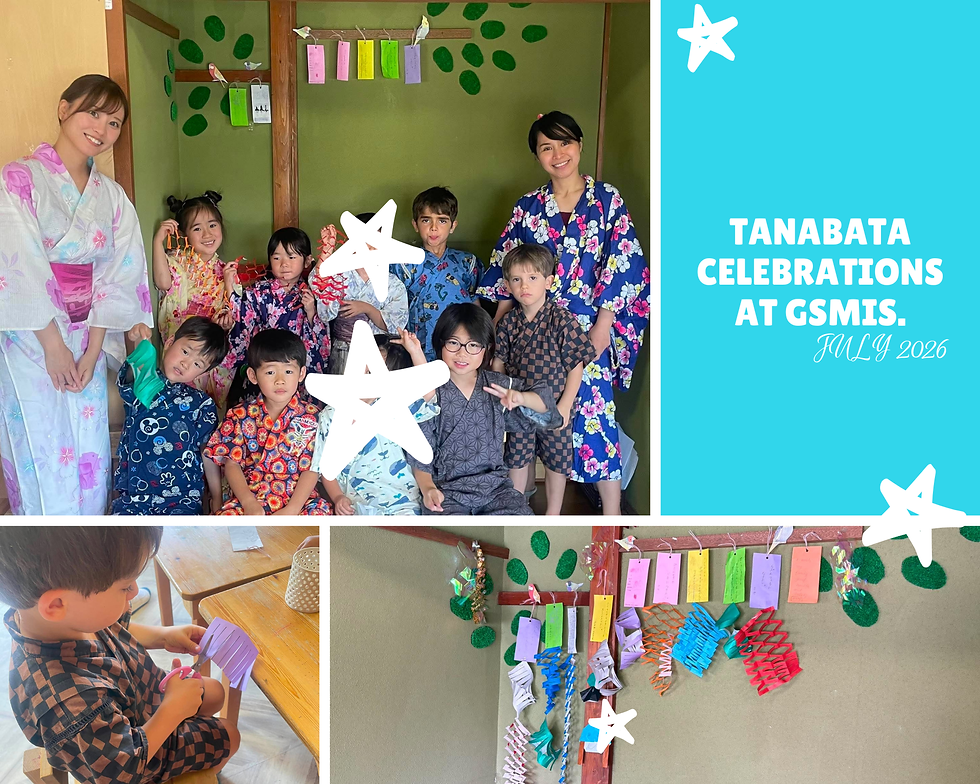
The highlight of our Tanabata celebration is the arts and crafts session. Children create:
Tanzaku: Small strips of paper where they write or draw their wishes.
Origami decorations: Paper cranes, stars, and other shapes that symbolize good luck.
Colorful paper chains: To decorate the bamboo branches and classroom.
These activities develop fine motor skills and creativity while introducing children to traditional Japanese art forms.
Learning New Vocabulary
We introduce vocabulary related to Tanabata and the month of July to expand language skills. Some examples include:
Bamboo (たけ, take)
Star (ほし, hoshi)
Wish (ねがい, negai)
Paper (かみ, kami)
Festival (まつり, matsuri)
Children learn these words through songs, storytelling, and labeling their crafts. This immersive approach helps them connect language with cultural context.
Storytelling and Cultural Context
Teachers share the story of Orihime and Hikoboshi in simple language, emphasizing themes of patience, hope, and reunion. This story sparks curiosity and empathy, encouraging children to appreciate different cultural narratives.
Benefits of Celebrating Cultural Festivals in Montessori Education
Fostering Respect and Inclusion
By celebrating Tanabata, children experience firsthand the joy of learning about cultures different from their own. This builds respect for diversity and encourages inclusive attitudes from an early age.
Enhancing Language and Cognitive Skills
Learning new vocabulary and engaging in storytelling supports language development. Arts and crafts stimulate creativity and problem-solving skills, which are key components of Montessori education.
Connecting with Nature and Community
Tanabata’s use of natural elements like bamboo and stars helps children develop a connection with nature. The communal aspect of decorating and sharing wishes fosters a sense of belonging and cooperation.
How Parents Can Support Cultural Learning at Home
Parents can extend the learning by:
Reading books about Tanabata and other cultural festivals.
Creating simple crafts together using paper and natural materials.
Encouraging children to share their wishes and stories.
Exploring other cultural celebrations throughout the year to build a broad understanding of the world.
Looking Ahead: More Cultural Celebrations to Come
Our school plans to continue embracing cultural diversity by celebrating festivals from around the world. Each event will include hands-on activities, language learning, and storytelling to deepen children’s global awareness and respect.
By integrating these experiences into our Montessori curriculum, we prepare children to grow into open-minded, curious, and compassionate individuals.
Celebrating Tanabata in July is more than just a fun craft day. It is a meaningful way to connect children with a culture, enrich their language skills, and build a community that values diversity. We invite families to join us in these celebrations and explore the many cultures that make our world unique. Together, we can nurture a generation that embraces learning and respects all traditions.


Comments